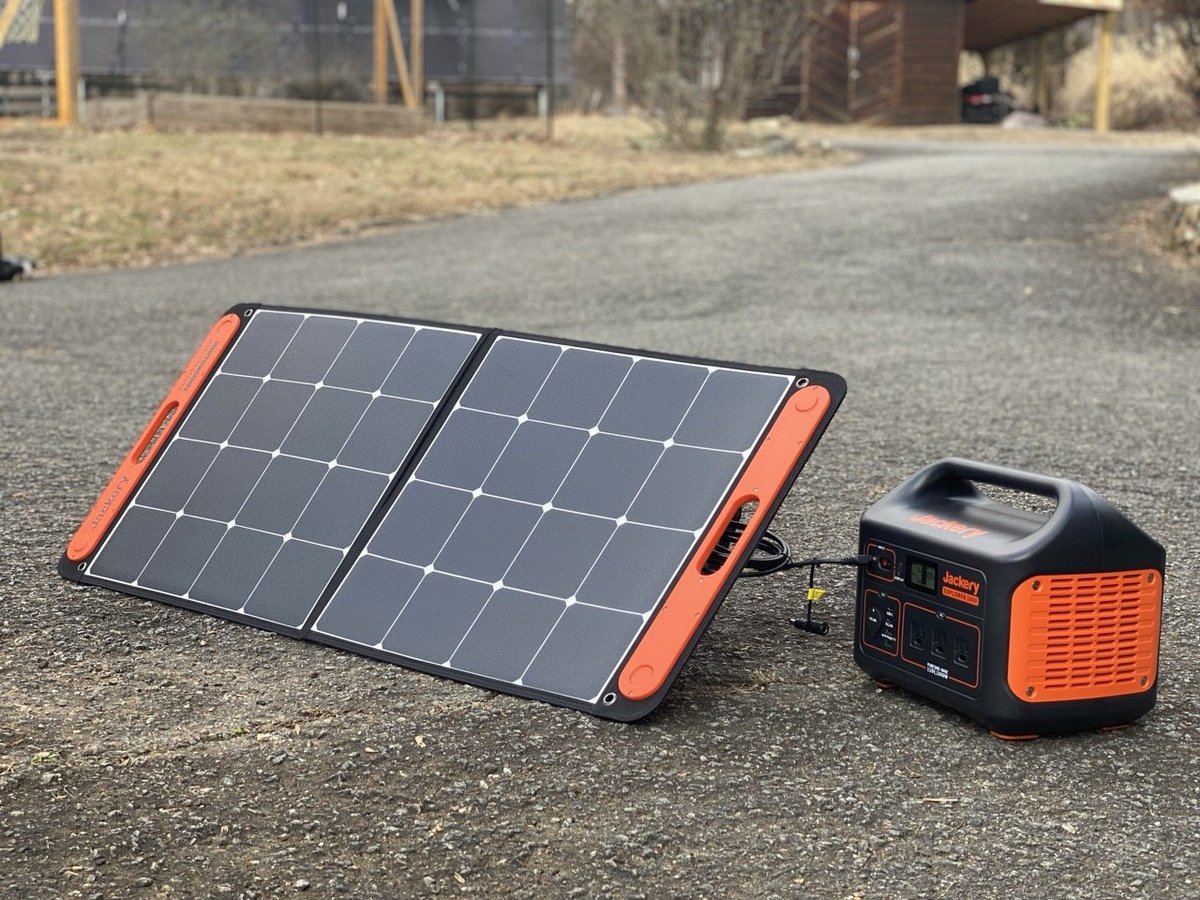
Imagine a world where you're always prepared, no matter what nature throws your way. A world where your outdoor adventures are limitless, and your home feels secure even when the grid falters. This isn't a distant dream; it's the reality offered by the best solar power generator systems, your silent, emission-free guardians of electricity.
In an age of unpredictable weather events, a growing desire for off-grid freedom, and the simple need for reliable backup power, solar generators have emerged as a truly vital solution. They’re easy to run, remarkably cost-effective over time, and offer a powerful, eco-conscious way to keep your lights on, your devices charged, and your adventures powered, especially when paired with solar panels.
What Exactly is a Solar Power Generator, Anyway?
At its core, a solar power generator system is a brilliant two-part setup: a robust power station (essentially a massive battery pack) and efficient solar panels. Unlike traditional fuel generators that create electricity in real-time by burning fossil fuels, solar generators store energy. They quietly soak up power from an AC outlet, a 12V car adapter, or, most impressively, the sun's rays via those solar panels, ready to deploy it when you need it most.
Understanding a few key terms will empower your decision-making. Watts (W) tell you how much power a generator can output at any given moment, or how much power a solar panel can input per hour. For instance, a 900-watt microwave needs a generator that can deliver at least 900W. Then there's Watt-hours (Wh), which quantifies the battery's capacity – essentially, how long your devices can run. This isn't a fixed time, as higher-powered devices will deplete the battery faster. A rough run time can be found by dividing the generator's total watt-hours by the device's wattage.
Look out for newer LiFePO4 batteries (Lithium Iron Phosphate) in your search. This advanced battery technology offers significantly longer lifespans, often 4,000 to 6,000 charge cycles compared to older lithium-ion batteries' ~500 cycles. They also perform better in extreme temperatures, boast enhanced safety features, and often charge faster, though they can add a bit of weight to the unit. To dive deeper into the nuts and bolts of how these systems work, including battery chemistry and inverter efficiency, take a look at our dedicated guide on Understanding Solar Generator Technology: Batteries.
Finding Your Perfect Power Partner: Key Considerations
Choosing the right solar power generator isn't a one-size-fits-all decision. It's about aligning the generator's capabilities with your specific needs, whether that’s a weekend camping trip, essential home backup, or powering a remote worksite. Consider these crucial factors to ensure your investment serves you well for years to come.
Matching Power to Your Needs: Capacity (Wh) & Output (W)
First, determine your power appetite. Capacity (Wh) dictates how long your devices can run. It’s always wise to overestimate a little. If you primarily need to charge phones and laptops, units under 1,000Wh are often sufficient. For multi-day road trips or van life, where you might run a small fridge, lights, and a laptop, aim for at least 1,000-1,500Wh. For powering major home appliances or heavy-duty power tools, you'll want the largest possible, often expandable, units.
Equally important is Output Capability (W), which ensures the generator can actually deliver enough power to start and run all your intended devices simultaneously. Look for a variety of ports – AC, USB-A, USB-C, 12V car, and even RV-specific outlets are common. A minimum of 300W output is recommended for basic use, with 500W or more for tackling larger tasks and appliances.
Recharging Your Adventure: Charging Speed & Options
How quickly and flexibly can you replenish your generator's energy? Look for multiple charging options: a standard wall outlet (AC), a car's 12V adapter, and, of course, solar panels. AC charging is generally the fastest, followed by 12V, then solar, though a large solar array can often outperform a 12V car charge.
For solar input, remember that while panels are rated by maximum watts, real-world output often ranges from 50-75% due to sun conditions, panel efficiency, and angle. Always ensure your chosen solar panels are within the power station's acceptable input range to prevent damage and maximize efficiency.
Portability, Durability, and Ease of Use
If you plan to take your generator on the go – camping, van conversions, or moving it around the house – portability is key. Units can range from a lightweight 7 pounds to over 100 pounds, with weight increasing significantly with capacity. Consider ergonomic handles, and for larger units, wheels can be a game-changer. Durability is essential, especially for outdoor and travel use; look for robust build quality that can withstand the elements. Finally, ease of use matters. A clear, easy-to-read display showing available power at a glance can make all the difference.
Longevity Through Smart Battery Care
Modern solar generators are built to last, with many LiFePO4 models rated for upwards of 25 years. You can extend their lifespan by following simple battery care tips: store your unit at around 80% charge, unplug it when fully charged to prevent degradation, and avoid letting the battery drop below 20% for extended periods.
For a deep dive into comparing features, understanding specs, and making the best choice for your personal needs, check out our Ultimate Buying Guide: How to pick the perfect solar power generator.
Top Picks: The Best Solar Power Generators for Every Scenario
With countless options on the market, finding the right fit can feel overwhelming. We've sifted through the leading models to highlight generators that excel in various situations, ensuring you find the ideal power solution for your specific lifestyle. Whether you’re looking for something compact for a quick trip or a powerhouse for serious home backup, there's a solar generator designed with you in mind. You can discover even more tailored recommendations by exploring Solar generators for every need.
Go-Anywhere Power: Best for Camping & Portable Needs
These units are designed to be compact, relatively lightweight, and provide reliable power for essential devices on the go.
- Jackery Explorer 300: This budget-friendly option is a fantastic starting point. At just 7 lbs and shoebox size, its 293Wh capacity provides ~31 phone charges or a few hours for a minifridge. Durable with a built-in handle, it’s perfect for casual campers.
- Anker Solix C800 Plus: A step up for car camping, this shoebox-sized, 24-lb unit offers 768Wh capacity and 1,200W output. It charges in about 3 hours with a 300W solar panel and includes a unique integrated magnetic lantern.
- Jackery Explorer 1000 v2: With 1,070Wh and a LiFePO4 battery (4,000 cycles), this generator is ideal for smaller items and off-grid camping. It features 7 versatile ports and can power a laptop 8 times or a small fridge for over 15 hours.
- Goal Zero Yeti 500: Boasting an upgraded LiFePO4 battery and IPX4 water resistance, this shockproof unit delivers 500W AC output and operates even below freezing. It's a solid choice for off-grid weekends or reliable emergency power.
Robust & Ready: Mid-Range Power Stations
When you need more power and capacity for extended trips, sensitive electronics, or small appliances, these generators strike an excellent balance.
- Bluetti AC180: Featuring a substantial 1,152Wh capacity and a robust 1,800W output (2,700W peak), this unit can keep a refrigerator running for up to 17 hours. It supports up to 500W solar input and offers ultra-fast charging to 80% in just 45 minutes. Plus, it includes wireless charging and app control.
- EcoFlow Delta 3: Weighing 28 lbs with 1,024Wh capacity and 1,800W output, this generator includes a LiFePO4 battery and lightning-fast charging: under 1 hour via AC or 2 hours with a 500W solar array. Its 13 ports and X-Boost technology make it incredibly versatile.
- Goal Zero Yeti 1000 Core: Still a strong contender for van-living, it balances 1,000Wh capacity with solid portability and faster charging for quick solar replenishment. Its rugged build quality ensures reliability on the road.
- DJI Power 2000: For those needing abundant connectivity, this compact 2,048Wh unit provides 3,000W running wattage with an impressive 4 AC, 4 USB-A, and 4 USB-C ports, plus a 30A plug.
Home Backup & Heavy-Duty Performance
These powerhouses are designed to handle larger loads, critical home systems, and extended power outages, often featuring expandable capacities and robust output.
- Bluetti Elite 200 v2 (Best overall): A true champion with 2,073Wh capacity, 2,600W running output (3,900W surge), and 1,000W solar input. Its LiFePO4 battery (6,000+ cycles) and sub-90-minute wall charging make it an exceptional all-rounder.
- EcoFlow Delta 2 Max (Fastest charging): Boasting 2,048Wh, this unit recharges to 80% in a blistering 43 minutes with 1,000W solar or 1.1 hours from a wall outlet. It's expandable up to 6kWh and features six AC outlets.
- Anker 767 (Best for frequent use): With LiFePO4 batteries (3,000 cycles to 80%), 2,048Wh capacity, and 2,400W output, this unit is built for durability and continuous use. Integrated wheels and a handle make its 67.3 lbs manageable.
- Jackery Explorer 2000 Plus (Still great): Offers 2kWh of expandable storage and a LiFePO4 battery (4,000 cycles). With output up to 6,000W for short durations, its integrated wheels and handle improve portability for a 61-lb unit.
- Anker Solix F2000: Perfect for powering refrigerators, greenhouse heaters, and RVs, this unit features heavy-duty wheels and a telescoping handle. It boasts 12 ports, including RV-specific ones, and supports up to 1,000W solar input.
- EcoFlow Delta Pro: A high-capacity behemoth that powered a full-size 25-cubic-foot refrigerator for over 51 hours. It recharges quickly (2h 36m from a standard outlet), supports EV charging stations, and up to 1,600W solar input. Ideal for serious off-grid use or critical home systems.
- EcoFlow Delta 3 Ultra Plus (Best high-capacity): Offering 3,072Wh (expandable), a massive 3,600W running output (7,200W surge), and 6 charging options, this heavy unit features an RV outlet, telescoping wheels, and a Storm Guard Mode for safety.
- Jackery HomePower 3000 (Best for home backup): Features ZeroDrain technology, ensuring it holds its charge reliably in storage. It offers 1,000Wh more capacity than the Explorer 2000 Plus while being smaller and lighter, a great choice for home emergencies.
- Bluetti Apex 300 (Best for off-grid living): Designed for serious off-grid setups, this unit features huge, expandable storage and scalable output. It supports dual 1,200W solar input and is intuitively operated despite its considerable weight.
Niche Innovators: Special Use Cases
Sometimes, specific conditions demand unique solutions.
- Bluetti Pioneer Na (Best for extreme cold): This groundbreaking unit features the first-ever sodium-ion battery, allowing it to operate and store at much lower temperatures than lithium-ion. It charges as low as 5°F (-15°C) and discharges down to -13°F (-25°C), making it unparalleled for cold climates.
For a side-by-side breakdown and in-depth analysis of these and other leading models, you can Explore top solar generator reviews to find the perfect fit.
Getting the Most Out of Your Solar Investment
Acquiring a solar power generator is just the first step; maximizing its potential ensures you get reliable, long-lasting performance. Properly setting up your solar panels, understanding optimal charging techniques, and following simple maintenance routines can significantly enhance efficiency and extend the lifespan of your unit.
From ideal panel angles to smart power consumption habits, there are many ways to make sure your solar generator is always ready when you are. Consider how you'll manage shade, monitor your battery health, and keep your components clean to maintain peak performance. For comprehensive advice on everything from initial setup to long-term care and troubleshooting, be sure to consult our guide on Maximizing Your Solar Generator: Setup.
In a world increasingly seeking sustainable and independent power solutions, the best solar power generator isn't just a gadget; it's an investment in resilience, freedom, and a greener future. With the right knowledge and the perfect unit, you're ready for anything the path ahead holds.