Is A Solar Generator Worth Its Cost, Value, And ROI?
Power outages, soaring fuel prices, and the desire for greater energy independence have many wondering about solar generators. But when it comes to a solar generator's cost, value, and ROI, is it truly a worthwhile investment for you? The short answer is often a resounding yes, especially when you factor in the long-term savings and versatility these quiet, fume-free powerhouses offer.
At a Glance: Key Takeaways
- Initial Cost vs. Long-Term Savings: While upfront costs can be higher than gas generators, solar units provide free energy from the sun, eliminating continuous fuel expenses.
- Minimal Maintenance: Solar generators have few moving parts, translating to less hassle and lower maintenance costs over their lifespan compared to gas models.
- Quiet & Safe: Operate silently with no fumes, making them safe for indoor use and ideal for noise-sensitive environments.
- Impressive Longevity: Especially models with LiFePO4 batteries, can last 10+ years, providing consistent power for thousands of cycles.
- Federal Tax Credits: In the US, solar generators can qualify for tax credits, significantly reducing your overall investment.
- Versatile Power: Perfect for emergency backup, off-grid living, camping, RVs, and even selling excess energy back to the grid.
The Silent Revolution: Why Solar Generators Are Gaining Ground
Imagine a power source that doesn't demand frequent trips to the gas station, doesn't pollute your air, and won't wake the neighbors with a roaring engine. That's the core promise of a solar generator. These devices harness the sun's abundant energy, convert it into usable electricity, and store it in robust battery packs.
Unlike traditional gas generators, which are essentially small combustion engines, solar generators are much simpler. They consist primarily of solar panels (to capture sunlight), a charge controller (to regulate the energy flow), a battery (to store the power), and an inverter (to convert stored DC power into AC power for your household devices). This elegant design translates directly into significant benefits for the user, addressing both immediate needs and long-term financial considerations.
Unpacking the Value: More Than Just Emergency Power
The true value of a solar generator extends far beyond simply keeping the lights on during an outage. It's about empowerment, convenience, and a smart financial play.
Free Energy, Forever (Almost)
Once you've made the initial purchase, the "fuel" for your solar generator — sunlight — is absolutely free. Contrast this with a gas generator, which gulps down $3-$6 per gallon of gasoline every time you fire it up. Over months and years, especially with frequent use, these fuel costs accumulate rapidly, often far surpassing the generator's initial price. With a solar generator, those ongoing expenses simply vanish.
Low-Maintenance Living
Gas generators require oil changes, spark plug replacements, air filter cleaning, and fuel stabilization – a regular chore sheet. Solar generators, with their minimal moving parts (usually just cooling fans), demand almost no maintenance. This means less time spent tinkering, fewer trips to the repair shop, and substantial savings on parts and labor over its lifetime. It’s a set-it-and-forget-it kind of reliability.
Quiet, Clean, and Convenient
Whether you're camping under the stars, working from an off-grid cabin, or riding out a storm at home, silence is golden. Solar generators operate silently, producing zero fumes or emissions. This makes them perfect for indoor use, sensitive outdoor environments, or simply enjoying peace and quiet. Gas generators, often blasting away at 60-90 dB, just can't compete on this front.
Power Wherever You Go
Many solar generator models are designed with portability in mind. Lightweight and compact, they're easy to transport to a campsite, an RV, an isolated cabin, or simply from your garage to your backyard. This freedom to take your power with you is a game-changer for adventurers and those needing mobile energy solutions.
Emergency Preparedness Redefined
When the grid goes down, gas stations often lose power too, making fuel scarce or impossible to get. Solar generators bypass this vulnerability entirely. They offer a self-sufficient power source during outages and natural disasters, ensuring your refrigerator stays cold, your lights stay on, your phones stay charged, and essential medical devices remain operational. It's not just convenience; it's peace of mind.
Built for the Long Haul
Investing in a quality solar generator, especially one featuring LiFePO4 (lithium iron phosphate) batteries, means you're buying a long-term asset. These units are designed for thousands of charge cycles, promising years of reliable performance. We'll dive deeper into battery types and longevity shortly.
The Upfront Equation: What Does a Solar Generator Cost?
Let's address the elephant in the room: the initial price. Yes, solar generators generally have a higher upfront cost than their gas-powered counterparts. However, understanding how these costs break down will help you see the long-term value.
You can expect initial costs to vary widely, from as little as $150-$500 for small, portable units, up to several thousand dollars for robust home backup systems.
The "Dollar Per Watt-Hour" Rule of Thumb
A good general estimate for budgeting is approximately $1 per watt-hour (Wh) of battery capacity. So, if you're eyeing a solar generator with a 2,000Wh battery, you can expect its price to hover around $2,000, before any accessories like extra solar panels. This is a helpful starting point, though various factors will sway the final price.
What Drives the Price Tag?
Several key components influence a solar generator's cost:
- Battery Type: This is perhaps the biggest factor. Lead-acid batteries are cheaper initially but come with significant drawbacks. They are 2-4 times heavier, have a much shorter cycle life, and a lower depth of discharge (meaning you can only safely use about 50% of their capacity without damaging them). Lithium-ion batteries (Li-ion) are better, but LiFePO4 batteries are the gold standard, offering superior longevity, safety, and performance, albeit at a higher initial price.
- Inverter Output: The inverter dictates how many watts your generator can continuously supply to AC appliances. Higher wattage inverters (e.g., 2,000W, 3,000W) capable of powering heavy-duty appliances will increase the cost.
- Solar Input Capacity: How quickly can the generator recharge from solar panels? Units with higher maximum solar input capacity (allowing more panels to be connected or faster charging from fewer panels) tend to be more expensive.
- Product Quality & Brand: Reputable brands with robust build quality, comprehensive warranties, and excellent customer support naturally command a higher price.
The Long-Term ROI: Lifespan and Financial Payback
This is where solar generators truly shine and provide an excellent return on investment. The "lifetime" of a solar generator is primarily measured by how long its battery pack maintains at least 80% of its original capacity. Even after hitting this mark, the unit still functions, just with a slightly reduced storage capability.
Decoding Battery Lifespans
- Overall Average: A general solar generator might average around 6.52 years before its battery degrades to 80% capacity, assuming one full charge/discharge cycle per day.
- Lithium-Ion Batteries: These typically offer about 2.19 years under the same daily cycle assumption. While decent, they are not the longest-lasting option.
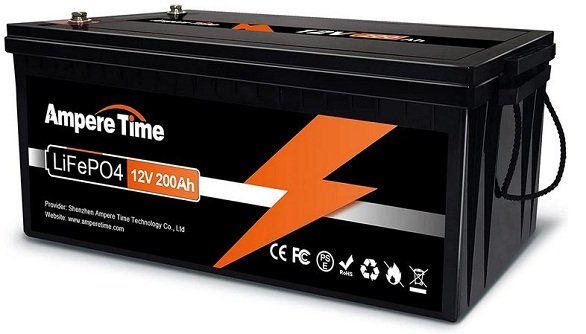
- LiFePO4 Batteries: Here's your ROI champion. With LiFePO4 batteries, you're looking at an average of 13.02 years (over 13 years!) of useful life before reaching 80% capacity. These batteries are often rated for 3,000 to 6,000 cycles. With proper care, they can easily exceed a decade of consistent use.
Remember, while the battery eventually degrades, the solar panels themselves are incredibly durable, often lasting 25-35 years. The type of battery in your power station is the primary determinant of your generator's overall functional lifespan and, by extension, its long-term value.
The Payback Period
Calculating the exact ROI involves comparing the initial cost against the savings from avoided fuel purchases and maintenance. For heavy users or those frequently experiencing outages, the payback period can be surprisingly short—sometimes just a few years. For occasional users, the "payback" might be more about the invaluable peace of mind and convenience, rather than purely financial savings.
Crucially, in the US, the Federal Solar Tax Credit can provide up to a 26% reduction in your total system cost. This dramatically shortens the payback period and makes the investment even more attractive. Looking for more details on this? You might want to explore resources on the federal solar tax credit.
Sizing Up Your Needs: Choosing the Right Generator
The market offers a wide range of solar generators, each suited for different applications. To make a smart investment, you need to match the generator's capabilities to your specific power requirements.
Small (Highly Portable Use)
- Capacity: 150-500Wh
- Weight: Typically less than 10-13.6 lbs.
- Ideal For: Charging smartphones, laptops, drones, cameras, or running small medical devices like CPAP machines (a 60W CPAP for 6 hours would use 360Wh). Some can even handle a mini-fridge (e.g., a 40W mini-fridge for 10+ hours).
- Cost Range: $125-$500
- Examples: Bluetti AC50S, Jackery Explorer 240, Yeti 200X.
- Consideration: Perfect for day trips, light camping, or emergency phone charging in your car.
Medium (Off-Grid Living, Partial Home-Backup)
- Capacity: 750-2,000Wh
- Ideal For: Powering multiple devices for extended periods, running a full-size refrigerator for several hours, or keeping essential home electronics operational. A Bluetti AC200P (2,000Wh) with a 2,000W continuous inverter, for instance, could power a 150W refrigerator for over 11 hours.
- Weight: Around 60.6 lbs (can be moved, but not carried long distances).
- Cost Range: From $1,000 to $2,500 (without panels).
- Consideration: A versatile option for extended camping, RVs, small cabins, or critical home backup during short to medium outages.
Large (Home Backup, Whole-Home Backup)
- Capacity: 2,000Wh and above, often with expandable battery options.
- Ideal For: Running full-size refrigerators for days, powering well pumps, or providing substantial whole-home backup for critical circuits.
- Weight: Generally over 68 lbs, making them less portable and often requiring a rolling cart for movement.
- Cost Range: $2,995 and up.
- Examples: Titan solar generator (2,000Wh base, expandable, 3,000W continuous / 6,000W peak inverter), OUPES Mega 5, Yeti 6000X.
- Consideration: A significant investment designed for serious home resilience or true off-grid living.
To find the best fit for your specific needs, it pays to do your homework and compare features. You can explore options to find the best solar generators currently available.
Realistic Expectations: Disadvantages and Considerations
While solar generators offer compelling advantages, it's important to approach the investment with a clear understanding of their limitations. No power solution is perfect.
The Initial Sticker Shock
As discussed, the upfront cost can be a barrier for some. While the long-term ROI is strong, that initial outlay can be significantly higher than a comparable gas generator. This is why budgeting and understanding the total cost of ownership are crucial.
Recharging Takes Time
Unlike simply refilling a gas tank in minutes, fully recharging a large solar generator can take multiple hours, sometimes even a full day, depending on several factors:
- Battery Size: Larger batteries simply take longer to fill.
- Solar Input: The wattage of your solar panels and how many you connect.
- Sunlight Conditions: Cloudy weather drastically reduces charging efficiency.
- Panel Placement: Incorrectly angled panels will underperform.
Mitigation Tips: - Maximize your solar input by using the highest wattage panels your generator supports.
- Position panels perpendicular to the sun for optimal exposure.
- Consider charging with a wall outlet when grid power is available for faster charging.
- In cloudy areas, doubling your panel wattage can help compensate for reduced sunlight.
Temperature Sensitivity
The power station itself (where the battery and inverter are housed) is susceptible to extreme temperatures. High heat (typically above 104°F or 40°C) can cause the unit to temporarily shut down or reduce its output to protect its internal components. Always operate your solar generator in a cool, dry, and well-circulated environment.
Size vs. Power: The Portability Trade-Off
There's a direct correlation: higher power output and larger battery capacity almost always mean a bigger, heavier, and less portable system. A unit capable of backing up your entire home isn't going to be something you casually toss in a backpack. Carefully consider your portability needs against your power demands.
Inconsistent Energy Supply
Solar energy is inherently intermittent. No sun, no charge. Cloudy days, rain, or nighttime will halt or significantly reduce solar charging efficiency. This reliance on sunlight is a core characteristic.
Mitigation Tips:
- Over-paneling: In perpetually cloudy regions, connecting more solar panels than theoretically needed (e.g., doubling your recommended panel wattage) can ensure you still get a decent charge even under suboptimal conditions.
- Strategic Storage: Plan to charge your generator fully during peak sunlight hours, storing enough energy to carry you through cloudy periods or nighttime.
What Makes a Solar Generator a Good Investment?
Not all solar generators are created equal. When evaluating options, keep these critical aspects in mind to ensure you're making a smart, durable investment.
Superior Cycle Life
This indicates how many times the battery can be fully charged and discharged before its capacity drops below 80%. Aim for batteries offering 1,500 cycles to 80% capacity or higher. High-end LiFePO4 batteries, like those in a Bluetti EP500/Pro, boast an impressive 6,000 cycles, translating to many years of daily use. More cycles mean a longer lifespan and better ROI.
A Powerful Inverter
The inverter is the workhorse that converts the battery's DC power into the AC power your appliances use. A robust inverter ensures your devices run smoothly and can handle surge currents from motors starting up.
- For systems under 3,000Wh: Look for a continuous AC output roughly equivalent to the battery's capacity (e.g., 1:1 ratio like 2,000Wh battery with a 2,000W inverter). The surge output (peak power for a few seconds) should ideally be 1:2 or higher (e.g., 2,000W continuous / 4,000W surge).
- For larger systems (over 3,000Wh): You'll typically find maximum inverter strengths around 3,000W continuous and 6,000W surge, suitable for heavy loads.
High Solar Input Capacity
This determines how quickly your generator can recharge from solar panels. A good solar input allows you to recharge within a single day of ideal sunlight. To calculate your needs, consider multiplying average ideal sunlight hours (e.g., 5 hours) by the maximum solar input, then factor in about 80% efficiency losses for real-world conditions. Ensure the input is sufficient to offset your power usage if you plan to operate devices while charging. Efficient charging means less downtime and more reliable power. You can also dive into maximize your solar panel efficiency with optimal panel setup.
Lithium-Based Battery Type
As highlighted, LiFePO4 batteries are the undisputed champions for solar generators. Their longer cycle life, enhanced safety, and consistent performance make them a superior choice for long-term investment compared to other lithium-ion variants or lead-acid batteries. To learn more about the technology, you might want to look into understanding LiFePO4 batteries.
Reliable Battery Capacity
This goes back to sizing. Don't undersize your generator. Carefully calculate the total wattage and runtime needed for your essential devices and appliances. It's often wise to have a little extra capacity than you think you'll need, just in case.
Essential Output Port Options
A great solar generator offers a versatile array of output ports to accommodate all your devices:
- Multiple USB-A and USB-C ports (with Power Delivery, or PD, for fast charging laptops).
- Numerous AC outlets (standard wall plugs).
- 12V DC sockets (car charger style) for specific applications.
The more options, the more versatile and useful your generator will be.
Practical Portability
Match the generator's weight and size to your intended use:
- Under 10 lbs: For ultimate portability – hiking, backpacking, quick car charges.
- Around 30 lbs: Manageable for carrying from a car to a campsite, or within a single property.
- 40+ lbs: Often requires a rolling cart or two people to move comfortably.
- Over 50 lbs: Designed for stationary home backup, heavy to move even short distances.
The Smart Money: Securing Your Energy Future
So, is a solar generator worth its cost, value, and ROI? Absolutely. When viewed as a long-term asset, the financial savings from eliminating fuel and maintenance costs, coupled with the security and convenience of having reliable, quiet, and clean power, make a compelling case.
The initial investment might be higher than a gas generator, but that cost is quickly amortized by the free energy from the sun and the exceptionally long lifespan of quality LiFePO4 batteries. Factor in potential federal tax credits, and the financial argument becomes even stronger.
Whether you're looking for robust home backup to prepare for unpredictable weather, seeking energy independence for your off-grid adventures, or simply aiming to reduce your carbon footprint, a solar generator delivers on its promise. It's an investment not just in power, but in preparedness, peace of mind, and a more sustainable future. If you're comparing options, consider how gas vs. solar generators stack up for your needs. The choice to invest in solar power is a step toward greater self-reliance and a smarter way to power your world.