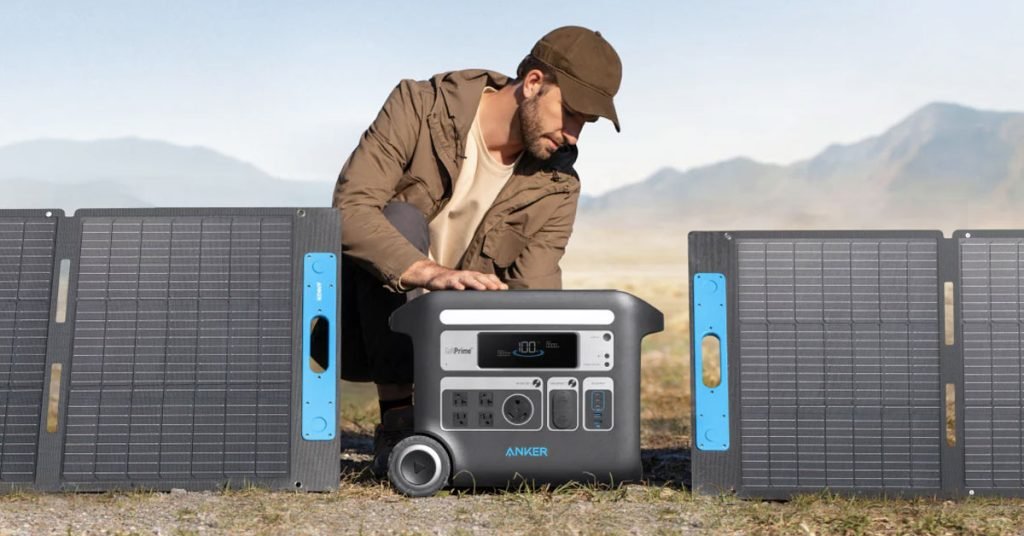
Solar Generators For Specific Needs Like Camping, RV, And Home Backup: Your Ultimate Guide
Imagine the silence of the wilderness, the open road stretching before you, or the peace of mind during a power outage—all while your essential devices, appliances, and even entire setups hum along, powered by the sun. This isn't a futuristic fantasy; it's the practical reality offered by modern solar generators, purpose-built to meet Solar Generators for Specific Needs: Camping, RV, Home Backup & More. But with so many options, how do you pick the powerhouse that's truly right for your adventure or emergency?
This isn't just a list of specs; it's a guide to understanding the heart of portable power, helping you navigate the market with confidence. We’ll cut through the noise, showing you exactly what to look for and which units excel in different scenarios, from a weekend car camping trip to full-blown off-grid living or ensuring your home stays lit when the grid goes dark.
At a Glance: Key Takeaways for Your Solar Generator Quest
- Size Matters (But Not Always How You Think): Match capacity (Wh) and output (W) to your specific devices and duration of use. Overestimate slightly!
- Fast Charging is a Game-Changer: Look for high input wattage across multiple charging methods (solar, wall, car).
- Port Variety is Key: Ensure it has the right outlets for your gear, including AC, USB-A/C, and potentially RV-specific plugs.
- LiFePO4 Batteries are Your Friend: They offer longer lifespans, greater safety, and better performance over traditional lithium-ion.
- Durability and Portability: Balance these based on how and where you'll use it. Wheels and handles are a bonus for larger units.
- Shop Smart: Major holidays like Prime Day or Black Friday often bring significant discounts.
Unpacking the Power Puzzle: What Exactly is a Solar Generator?
At its core, a solar generator isn't a "generator" in the traditional sense, which typically burns fuel. Instead, think of it as a robust, portable battery (a "power station") that can be recharged using solar panels. It stores energy from the sun (or a wall outlet, or your car's 12V port) in a large battery pack, then converts that stored energy into usable power for your devices via AC outlets, USB ports, and DC connections.
These units are game-changers for anyone needing reliable power away from the grid, making them indispensable for emergencies, remote work, extended travel, and, yes, a whole lot more. They offer a clean, quiet, and renewable energy source, freeing you from noisy, fuel-guzzling alternatives.
Decoding the Power: Essential Buying Considerations
Before you dive into specific models, you need a clear understanding of what makes a solar generator tick. These are the critical factors that will dictate how well a unit serves your unique needs. Think of this as your personalized blueprint for choosing the best solar power generator.
Storage Capacity (Wh): How Much Juice Do You Need?
Measured in watt-hours (Wh), this number tells you how much energy the battery can store. A higher Wh rating means it can power your devices for longer.
- How to Calculate: Estimate the wattage of the devices you plan to power and how many hours you’ll use them. Multiply device wattage by hours of use to get your Wh needs. For example, a 100W light bulb running for 5 hours requires 500Wh.
- The Golden Rule: Always overestimate your power needs, especially for multi-day use or if you’re outfitting a converted van. It’s better to have too much power than not enough. Remember, cold weather can also slightly reduce battery efficiency.
Charging Capability (W): Getting Back to Full Power, Faster
This refers to how quickly the generator can recharge its internal battery. Look for units that offer versatile and rapid charging via:
- Solar Panels: The faster the max input capacity (W), the more solar panels you can connect and the quicker it recharges. Aim for at least a few hundred watts input for efficient solar charging.
- Wall Outlets (AC): Essential for quick top-ups before a trip or during a grid outage. Many modern units can charge from 0-80% in under an hour from a wall outlet.
- Vehicle 12-volt Plugs: Handy for charging on the go, though typically slower than solar or wall charging.
Output Capability (W): Powering All Your Gear, Simultaneously
This is the maximum power the generator can deliver to your devices at the same time. It’s almost always significantly higher than the input capacity.
- Minimum Recommendations: A minimum of 300W output is good for basic charging (phones, laptops, small lights). For larger tasks like powering blenders, mini-fridges, or power tools, aim for 500W or much higher.
- Port Variety: Ensure it has the right mix of ports:
- AC Outlets: For standard household plugs.
- USB-A & USB-C: For modern electronics. USB-C Power Delivery (PD) is crucial for fast-charging laptops and larger devices.
- 12V DC Ports (Car/Cigarette Lighter): For auto accessories.
- RV Plugs (30A): Essential for powering entire RVs.
Portability: Haul It or Hide It?
Your intended use case will heavily influence how portable your generator needs to be.
- Camping/Van Conversions: Size and weight are critical. Many recommended units fall into the 30-60 pound range, roughly the size of 1-3 shoeboxes. Look for sturdy handles, and for heavier units, built-in wheels are a godsend.
- Home Backup: While portability is still nice, it's less of a primary concern than sheer capacity and reliability.
Durability: Built for the Bumps and Bruises
Especially for outdoor and travel use, sturdy construction is non-negotiable. Look for robust casings, high-quality components, and a good warranty. These units are an investment, and you want them to withstand the rigors of your adventures. Modern solar generators, especially those with LiFePO4 batteries, are rated to last upwards of 25 years with proper care. You’ll want to commit to maintaining your solar power unit to maximize that lifespan.
Matching Power to Purpose: Your Specific Needs Guide
Now that we've covered the fundamentals, let's explore which solar generators shine brightest for different applications.
For the Weekend Warrior: Car Camping & Short Trips
When you’re heading out for a couple of nights, you need something compact, easy to transport, and capable of powering your essentials without fuss. Think charging phones, running a small fan, powering a projector for an outdoor movie night, or keeping a portable cooler cold.
What to look for:
- Moderate Capacity: 300Wh - 1000Wh
- Good Portability: Lightweight (under 30 lbs), compact design.
- Decent Output: 300W - 1200W for basic appliances and charging.
- Quick Recharging: Ability to recharge quickly via car or small solar panel.
Recommended Units: - Anker Solix C800 Plus: An excellent choice for its blend of portability and thoughtful features. It boasts 768Wh of storage and 1,200W (1,600W surge) output, ample for most car camping needs. Its variable-setting magnetic camp lamp is a brilliant touch, and it charges in just 3 hours with a 300W solar input. At 24 lbs, it’s easily manageable, though it’s definitely too small for larger RV demands.
- Specs: Storage 768Wh, Input 1,440W, Output 1,200W (1,600W surge), Dimensions 14.61 x 8.07 x 9.96 in, Weight 24 lbs.
- Price: Around $650.
- Jackery Explorer 300: This unit is the definition of "budget-friendly utility." At just 7.1 lbs, it's incredibly portable, perfect for throwing in the trunk. Its 293Wh capacity and 300W (500W surge) output handle basic device recharging like phones, tablets, and a portable speaker for a weekend. It's an upscale power bank that provides real generator utility at a very accessible price point.
- Specs: Storage 293Wh, Input 90W, Output 300W (500W surge), Dimensions 9.1 x 5.2 x 7.8 in, Weight 7.1 lbs.
- Price: Around $250.
Life on the Road: RVs, Van Conversions & Overlanding
Living or traveling in an RV or converted van demands more substantial power. You’re looking at running mini-fridges, microwaves, laptops, lights, and potentially small AC units or power tools. Expandability, higher output, and dedicated RV ports become crucial here. For long hauls, robust RV power solutions are a must-have.
What to look for:
- High Capacity: 1500Wh+, often expandable.
- High Output: 2000W+ with significant surge capability.
- RV-Specific Ports: A 30A RV outlet is highly desirable.
- Durable & Mobile: Built-in wheels and sturdy handles for repositioning heavier units.
- Fast Charging: Ability to quickly recharge from shore power, solar, or vehicle.
Recommended Units: - EcoFlow Delta 3 Ultra Plus: This is a powerhouse built for the road. Its 3,072Wh capacity is generous, and it's expandable up to a massive 11kWh, making it suitable for extended off-grid living. With 3,600W output (7,200W surge) and a dedicated 30A RV outlet, it can power nearly anything in a typical RV or van. Super fast charging (89 minutes from mains) is another huge advantage. Yes, it’s heavy at 74.2 lbs, but the telescoping wheels make it manageable.
- Specs: Storage 3,072Wh (expandable up to 11KWh), Input 1,800W, Output 3,600W (7,200W surge), Dimensions 24.14 x 12.9 x 15.5 in, Weight 74.2 lbs.
- Price: Around $1,600.
- Jackery Explorer 2000 Plus: A strong contender with 2,042.8Wh of storage, expandable up to 24,000Wh, this unit means serious business. Its 6,000W output is exceptional, capable of handling demanding power tools or multiple high-wattage appliances simultaneously. The built-in wheels and handle are essential for its 61 lbs weight, and the LiFePO4 batteries ensure a long lifespan (4,000 cycles to 70%).
- Specs: Storage 2,042.8Wh (expandable up to 24,000Wh), Output 6,000W, Dimensions 18.6 x 14.7 x 14.1 in, Weight 61 lbs.
- Price: Around $2,000.
- Goal Zero Yeti 1000 Core: For those prioritizing rugged durability and balanced portability, the Yeti 1000 Core is a solid option. Its 983Wh capacity and 1,200W (2,400W surge) output are great for smaller van setups or extended camping trips. Goal Zero's reputation for robust build quality means it can handle the bumps and vibrations of travel, and its rapid recharge rate is a definite plus. At 31.68 lbs, it strikes a good balance for portability.
- Specs: Storage 983Wh, Input 600W, Output 1,200W (2,400W surge), Dimensions 9.86 x 15.25 x 10.23 in, Weight 31.68 lbs.
- Price: Around $1,200.
Uninterrupted Living: Home Backup & Emergencies
When the grid goes down, a reliable solar generator can keep your lights on, your fridge cold, and your communication devices charged. For home backup, you'll need significant capacity, strong output, and often, features that ensure long-term readiness. Planning for these events is crucial, and a comprehensive emergency power guide can save you significant stress.
What to look for:
- Substantial Capacity: 2000Wh+ (often expandable for longer outages).
- High Output: 2000W+ to handle essential appliances like refrigerators, sump pumps, or medical devices.
- Reliable Battery Chemistry: LiFePO4 for longevity and safety.
- Fast Charging: To quickly replenish once power is restored or solar is available.
- Long-Term Charge Retention: Important for units that sit idle for extended periods.
Recommended Units: - Jackery HomePower 3000: Designed specifically for home backup, the Jackery HomePower 3000 offers an excellent 3,072Wh capacity and a powerful 3,600W (7,200W surge) output. Its standout feature is ZeroDrain technology, which ensures long-term charge retention, meaning it's ready to go even after months of inactivity. It's remarkably compact for its capacity, though still a solid 59.52 lbs.
- Specs: Storage 3,072Wh, Input 1,440W, Output 3,600W (7,200W surge), Dimensions 16.4×12.8×12 in, Weight 59.52 lbs.
- Price: Around $2,500.
- EcoFlow Delta 3 Ultra Plus: (Also recommended for RVs) Its high capacity (3,072Wh, expandable) and impressive output make it a dual-threat for home backup. Storm Guard Mode adds another layer of preparedness, allowing it to automatically charge from the grid if a storm is detected. The fast charging capabilities mean you can quickly top it off when grid power is intermittent.
- Specs: Storage 3,072Wh (expandable up to 11KWh), Input 1,800W, Output 3,600W (7,200W surge), Dimensions 24.14 x 12.9 x 15.5 in, Weight 74.2 lbs.
- Price: Around $1,600.
- Bluetti Elite 200 v2: While not specifically marketed for whole-home backup, the Elite 200 v2 is an excellent "best overall" choice that serves well for critical circuits during an outage. Its 2,073Wh capacity and 2,600W (3,900W surge) output can comfortably run a refrigerator, some lights, and charging for several hours. Its portability (53.4 lbs) also means it can be moved around the house easily.
- Specs: Storage 2,073Wh, Input 1,800W, Output 2,600W (3,900W surge), Dimensions 13.8 × 9.8 × 12.7 in, Weight 53.4 lbs.
- Price: Around $1,700.
Important Note on Whole-Home Power: While it's possible to power a house with solar, a single portable solar generator is usually insufficient for an entire home's needs unless you have very limited power usage and potentially combine multiple units. For true whole-home backup, you’d typically look at larger, more integrated home battery systems, often permanently installed and tied into your electrical panel. Portable units are best for critical circuits or specific rooms.
Mastering the Off-Grid: Remote Work & Extended Stays
For those truly embracing an off-grid lifestyle, whether for remote work, long-term homesteading, or extensive field operations, you need a system that offers massive, scalable power. This isn't just about surviving; it's about thriving independently. Creating true off-grid living essentials requires robust, expandable power.
What to look for:
- Massive Expandability: Ability to add multiple external batteries for huge capacity.
- Very High Input/Output: Capable of handling significant solar arrays and high-demand tools/appliances.
- Advanced Energy Management: Smart apps, priority charging.
- Industrial-Grade Durability: Built to withstand continuous use and harsh environments.
Recommended Units: - Bluetti Apex 300: This is the pinnacle of portable off-grid power. With a base storage of 5,529.6Wh, it's expandable up to an astounding 58KWh, rivaling small home battery systems. Its huge input (up to 30KW with expansion) and output (up to 11.5KW with expansion) rates mean you can run virtually anything. The optional SolarX accessory further enhances its solar capability, making it ideal for large-scale, reliable, scaled off-grid power systems. It’s expensive and very heavy (inverter 83.78 lbs / battery 65.4 lbs), but delivers unparalleled performance.
- Specs: Storage 5,529.6Wh (expandable up to 58KWh), Input 1,800W (expandable up to 30KW), Output 3,800W (expandable up to 11.5KW), Dimensions Inverter 20.67 × 12.87 × 12.6 in / Battery 20.67 x 12.87 x 8.23 in, Weight Inverter 83.78 lbs / Battery 65.4 lbs.
- Price: Around $3,500 (base unit).
- EcoFlow Delta 3 Ultra Plus: (Also recommended for RVs and Home Backup) Its expandability up to 11KWh, combined with its high output and fast charging, makes it an excellent, slightly more manageable option for substantial off-grid needs where the Apex 300 might be overkill.
Beyond the Basics: Specialized Use Cases
Sometimes, a particular feature stands out as the most important. Here are some top picks for those specific needs.
- Best Overall / Most Versatile: Bluetti Elite 200 v2
- Delivers an excellent balance of portability (53.4 lbs), capacity (2,073Wh), and performance (2,600W output, 3,900W surge) for the vast majority of users. Its sleek design, excellent build quality, and useful app, combined with 6,000+ LiFePO4 battery cycles, make it a true all-rounder for camping, light RV use, or essential home backup.
- Specs: Storage 2,073Wh, Input 1,800W, Output 2,600W (3,900W surge), Dimensions 13.8 × 9.8 × 12.7 in, Weight 53.4 lbs.
- Price: Around $1,700.
- Best for Frequent Use & Durability: Anker 767 Portable Power Station
- If you plan to use your solar generator almost daily or need unwavering reliability, the Anker 767 is a strong contender. Its LiFePO4 batteries are rated for 3,000 cycles to 80% capacity, and it charges incredibly fast (0-80% in under 30 minutes with sufficient power, or 80% in less than two hours from a wall outlet). With 2,048Wh storage and 2,400W output, plus plenty of ports, it’s a workhorse, albeit a heavy one at 67.3 lbs.
- Specs: Storage 2,048Wh, Input 1,440W Max (1,000W Max Solar), Output 2,400W, Dimensions 20.67 x 9.84 x 15.55 in, Weight 67.3 lbs.
- Price: Around $2,000.
- Fastest Charging: EcoFlow Delta 2 Max
- When time is of the essence, the Delta 2 Max excels. It can charge to 80% in a remarkable 43 minutes with 1,000W solar panels, or 0-80% in just 1.1 hours from a mains outlet. Its 2,048Wh capacity (expandable to 6,000Wh) and 3,400W output, combined with long-lasting LiFePO4 batteries, make it ideal for situations where quick turnarounds are critical. At 50.71 lbs, it's also relatively compact for its capabilities.
- Specs: Storage 2,048Wh (expandable to 6,000Wh), Output 3,400W, Dimensions 19.8 x 9.5 x 12.01 in, Weight 50.71 lbs.
- Price: Around $2,000.
- Best for Lots of Ports & Devices: DJI Power 2000
- If your primary need is to simultaneously power and charge a multitude of devices—drones, cameras, laptops, phones, and more—the DJI Power 2000 is your go-to. It packs a punch with 2,048Wh of storage and 3,000W output, but its real advantage lies in its sheer number of ports: four AC, four USB-A, four USB-C, and a 30A plug. All this comes in a reasonably portable 48.5 lbs package.
- Specs: Storage 2,048Wh, Input 1,800W, Output 3,000W, Dimensions 17.6 x 8.9 x 12.8 in, Weight 48.5 lbs.
- Price: Around $1,300.
- Best for Extreme Cold: Bluetti Pioneer Na
- Standard lithium-ion batteries struggle in freezing temperatures. The Bluetti Pioneer Na breaks new ground as the first sodium-ion solar power generator, offering unparalleled performance and reliability in cold climates. It can charge as low as 5°F, discharge down to -13°F, and store at -20°F. Despite the sodium chemistry making it slightly larger and heavier than lithium counterparts (35.3 lbs for 900Wh), its fast charging (0-full in 45 minutes) and 1,500W output make it indispensable for arctic adventures or winter emergencies.
- Specs: Storage 900Wh, Input 1,900W, Output 1,500W (2,500W surge), Dimensions 13.4 x 10 x 12.5 in, Weight 35.3 lbs.
- Price: Around $1,300.
Deep Dive: Understanding Key Technologies
Beyond the big numbers, a few underlying technologies are worth understanding.
Battery Chemistry: LiFePO4 is the Gold Standard
Most modern, high-quality solar generators use Lithium Iron Phosphate (LiFePO4) batteries. These are generally preferred over older Lithium-ion (NMC) batteries for several reasons:
- Longer Lifespan: LiFePO4 batteries offer significantly more charge cycles (often 3,000-6,000+ to 80% capacity) compared to NMC (500-1,000 cycles). This means years, or even decades, of reliable use.
- Enhanced Safety: They are inherently more stable and less prone to thermal runaway (overheating or catching fire) than NMC batteries.
- Better Performance: They often maintain performance better across their discharge cycle and can handle faster charging/discharging rates.
Inverter Types: Pure Sine Wave is a Must
Ensure your solar generator has a pure sine wave inverter. This produces a clean, stable electrical wave form, identical to what you get from a standard wall outlet. This is crucial for:
- Sensitive Electronics: Laptops, medical equipment, and modern appliances operate best and last longer with pure sine wave power.
- Preventing Damage: Modified sine wave inverters (found in cheaper, older power stations) can damage sensitive electronics or cause them to operate inefficiently.
Solar Integration: Maximize Your Harvest
The "Input (W)" specification is key for solar charging. A higher number means the unit can accept more power from solar panels, allowing for faster recharges, especially on sunny days. Look for:
- MPPT (Maximum Power Point Tracking) Controller: This is a sophisticated charge controller that optimizes the power harvest from your solar panels, especially in varying light conditions. Most quality solar generators have this built-in.
- Parallel Charging: Some units allow you to connect multiple solar panels in parallel to maximize input wattage. This is particularly useful when you're looking for the best portable solar panels to pair with your generator.
Getting the Most Out of Your Solar Generator
Investing in a solar generator is just the first step. Proper care and smart practices will ensure you get the maximum value and longevity from your unit.
Maintenance & Care for Years of Power
- Store in a Cool, Dry Place: Avoid extreme temperatures, both hot and cold, when storing for long periods.
- Maintain a Partial Charge: For LiFePO4 batteries, storing at around 50-80% charge is often recommended for optimal long-term health, though many modern units manage this automatically.
- Regular Use (Even if Infrequent): Cycle the battery every few months, even if you don't have an immediate need, to keep the cells active.
- Keep Ports Clean: Dust and debris can interfere with connections.
- Read the Manual: Always follow the manufacturer's specific guidelines for your model.
Smart Shopping: Timing Your Purchase
Solar generators are a significant investment, but you don't always have to pay full price. Keep an eye out for:
- Major Holiday Sales: Amazon Prime Day, Black Friday, Cyber Monday, and even Earth Day often feature steep discounts on popular models and bundles.
- Manufacturer Promotions: Brands like Jackery, EcoFlow, Bluetti, and Anker frequently run their own sales events.
- Bundles: Sometimes you can save money by purchasing a generator and compatible solar panels together.
Common Questions About Solar Generators
Q: Can a portable solar generator power an entire house?
A: Generally, no. While some large, expandable portable solar generators (like the Bluetti Apex 300) can approach whole-home capacity, they are typically designed for specific circuits or essential appliances during an outage, not to run an entire household indefinitely. For true whole-home backup, you'll need a much larger, often permanently installed, home battery system.
Q: How long do solar generators last?
A: With proper care, modern solar generators featuring LiFePO4 batteries can last upwards of 25 years. Their lifespan is measured in charge cycles; LiFePO4 batteries typically offer 3,000-6,000 cycles to 80% capacity. This means you can fully charge and discharge the unit thousands of times before its total capacity noticeably degrades.
Q: What's the difference between a solar generator and a power bank?
A: A power bank is a small, portable battery designed for charging personal electronic devices (phones, tablets). A solar generator (or portable power station) is a much larger, more powerful unit with significantly greater capacity, higher output wattage, and a wider array of ports (including AC outlets) capable of running appliances, power tools, and even entire RVs. Solar generators can also be recharged via solar panels, a feature rarely found in typical power banks.
Q: How do I size a solar generator for my needs?
A: To size your generator, list all the devices and appliances you want to power. Find their wattage (W) and estimate how many hours you'll use each. Multiply wattage by hours to get watt-hours (Wh) for each device, then sum them up for your total daily Wh need. Add a buffer (20-30%) for efficiency loss and unexpected usage. This Wh total will guide your generator's storage capacity (e.g., if you need 1000Wh/day, look for a 1000Wh+ generator). Also, check the highest wattage of any single device to ensure the generator's output (W) can handle it.
Making Your Power Play: Ready to Choose
The world of solar generators is brimming with innovative solutions, each tailored to a specific set of demands. By understanding your unique needs—whether it's the ultralight portability for a weekend hike, the robust output for an RV adventure, or the unwavering reliability for home emergencies—you can confidently select a unit that empowers your lifestyle.
Gone are the days of noisy, polluting gas generators being your only off-grid power option. Embrace the quiet, clean, and dependable energy of the sun. With this guide, you're not just buying a piece of equipment; you're investing in freedom, preparedness, and peace of mind. Go forth, explore, and power your world, wherever it may take you.